 Access & Facilities
 Opening Times
 Museum Holidays
| Closed Days, April 2026 to March 2027 | ||
|---|---|---|
| April: 13, 20, 27 | May: 7, 11, 18, 25 | June: 8, 15, 22, 29 |
| July: 6, 13 | August: 3, 21 (am), 31 | September: 1-4, 7, 14, 28 |
| October: 5, 19, 26 | November: 2, 9, 16, 24, 30 | December: 7, 14, 21, 27-31 |
| January: 1-3, 18-22, 25 | February: 1, 8, 15, 22 | March: 1, 8, 14-15 |
 Admission Fees to Permanent Exhibition Rooms
Additional charges apply for some Special Exhibitions.
No ticket is necessary for the outdoor exhibits, including the treetop walk.
 Train
TrainTake the JR Biwako (Tokaido) line from Kyoto or Maibara (or any station on the Biwako line) to Kusatsu (Shiga) Station. Both local trains and Special Rapid Service trains stop at Kusatsu Station.
 Bus
BusFrom the west side of Kusatsu station, buses depart for the museum from bus stop number 2. Look for a bus with the destination sign Biwako-haku-butsu-kan (Lake Biwa Museum or Biwako Museum):

| Going to the Museum | ||
| Hour | Mondays to Fridays | Saturdays, Sundays & Public Holidays |
| 8: | 00, 50 | 00 |
| 9: | 30 | 00, 30 |
| 10: | 30 | 00, 30 |
| 11: | 30 | 00, 30 |
| 12: | 30 | 00, 30 |
| 13: | 30 | 00, 30 |
| 14: | 30 | 00, 30 |
| 15: | 30 | 30 |
| 16: | 30 | 00, 30 |
| 17: | 30 | 00 |
| 18: | 30 | 00, 30 |
| 19: | ||
| Returning from the Museum | ||
| Hour | Mondays to Fridays | Saturdays, Sundays & Public Holidays |
| 8: | 27 | 27 |
| 9: | 19, 59 | 29, 59 |
| 10: | 59 | 29, 59 |
| 11: | 59 | 29, 59 |
| 12: | 59 | 29, 54 |
| 13: | 59 | 29, 59 |
| 14: | 59 | 29, 59 |
| 15: | 59 | 59 |
| 16: | 29, 54 | |
| 17: | 30 | 29 |
| 18: | 00, 59 | 24, 54 |
| 19: | ||
For a detailed guide on how to catch a bus to the Museum, and buses in Japan generally, see a guide to catching a bus to the Museum.
 Taxi
TaxiTaxis can be found at the taxi rank on the west side of Kusatsu Station (follow signs for "West Exit"). It takes approximately 20 minutes from Kusatsu Station to the Museum. Ask the driver for "Lake Biwa Museum" or "Biwako haku-butsu-kan".
Alternatively, take a taxi from Moriyama Station (two stations northeast of Kusatsu); Moriyama Station is closer to the Museum than Kusatsu Station, but there is no bus service to the Museum from Moriyama.
 Getting Here by Car
Exit the Meishin Expressway at the Ritto Interchange and drive along the Ritto Shinanaka Route and the Lakeshore (Sazanami) Road (approximately 30 minutes). Parking is available.
 Restaurant
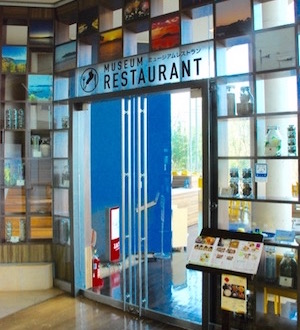
Taste traditional Japanese cuisine or Western-influenced dishes in the Museum Restaurant. The menu includes local produce, such as fish from Lake Biwa.
Opening times
11:00 am to 3:30 pm (last orders 3:00 pm)
 Shop
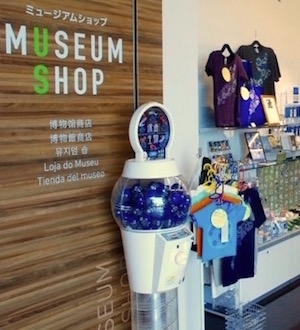
ShopA wide range of gifts and souvenirs are available at the Museum Shop - Oydeya, including merchandise unique to the Lake Biwa Museum.
A great place to find that special gift for someone, or for that exclusive memento of your trip to the Lake Biwa Museum.
 Nursing Room
A room for families travelling with young children and babies is available.
Please consult with staff to use this room.
 Mobility
The Museum is fully accessible to wheelchair users, and a selection of wheelchairs and baby strollers are available for use.
Please ask at the ticket counter.
 Lunch & Resting Spaces
 Photography in the Museum
We’re happy for you to take photographs during your visit! To help everyone enjoy the Museum and keep our exhibits safe, we kindly ask you to follow these guidelines:
Thank you for your understanding and cooperation.
 About the Museum
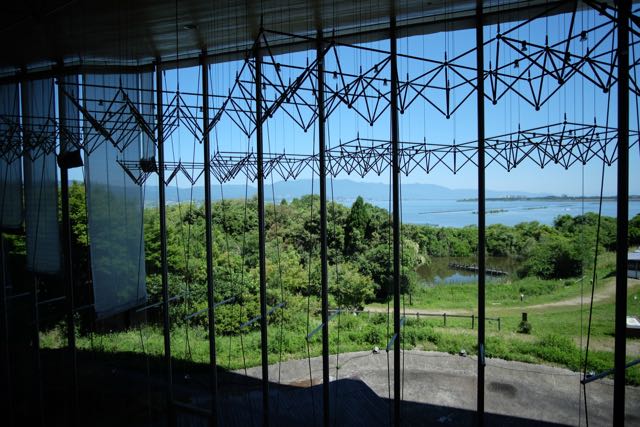
The Lake Biwa Museum is run by Shiga Prefectural Government and opened in October 1996. Since opening over 14 million people have visited the Museum. A major renewal of the Museum's exhibitions and aquarium occurred from 2015 to 2020, in three stages.
The Museum is a research institute, and employs around 30 researchers. While contributing to the running of the Museum, the researchers also study various aspects of Lake Biwa and other lakes of the world, including history, zoology, botany, geology, archaeology, and ethnology.
The Museum's aquarium, one of the largest freshwater aquariums in Japan, includes a conservation center, which breeds vulnerable and threatened species of fish.
The Museum is home to large collections of biological, geological and cultural specimens and artefacts, which are used for scientific research and exhibitions.
The total floor area of the main building is 23,987 m2, including exhibition space of 4,122 m2 and aquarium space of 1,984 m2.
A Profile of the Lake Biwa Museum is available to download (PDF 3MB).